
Read Our Stories
These stories detail the amazing work done by Texas A&M Toxicology alumni.
Suji Jang

Dr. Suji Jang graduated from the Toxicology Program in 2023 under the mentorship of Weihsueh Chiu at Texas A&M University. Her doctoral training was supported by multiple funding sources, including the Texas A&M Superfund Research Program (NIH/NIEHS), the National Academies Gulf Research Program, and U.S. EPA STAR grants.
Her dissertation focused on integrating diverse “big data” approaches to improve chemical risk assessment. She characterized spatial and temporal trends in environmental contaminants following disaster events, evaluated population variability in responses to chemical mixtures using human in vitro models, and developed probabilistic cancer risk estimates using animal bioassay data. Her work contributed to advancing data-driven and population-relevant approaches in toxicology.
Following graduation, Dr. Jang began her career at Samsung Electronics Health Research Institute, where she derived DNELs for chemicals used in semiconductor manufacturing and conducted risk characterization by organizing and evaluating toxicological data. She later joined ExxonMobil Biomedical Sciences, Inc. as a toxicologist, where she supports global chemical registration and hazard characterization efforts by interpreting complex datasets, identifying data gaps, and contributing to regulatory strategies across multiple jurisdictions.
Her advice to students is to follow your heart. You know yourself better than anyone else, and that inner voice is often more accurate than outside opinions. Listening to others can help you learn, but don’t let it override what you truly want. Trusting your own direction—even when it feels uncertain—will help you build a path that is genuinely yours.
Toriq Mustapha

Dr. Toriq Mustapha graduated from the Toxicology Program in 2023 under the mentorship of Dr. Natalie Johnson, an alumnus of the same program. During his training, he developed broad expertise across multiple research disciplines. His dissertation focused on tools for assessing early-life susceptibility to air pollution, utilizing a combination of analytical chemistry techniques, as well as in vitro and in vivo models for early hazard assessment. As part of this work, he developed a novel neonatal in vivo whole-body aerosol inhalation exposure system to study how ultrafine particulate matter affects infant pulmonary T-cell immunomodulation and its connection to the gut-lung axis microbiome.
As a Superfund trainee, he led the development effort and deployment of a mobile environmental sampling van equipped with advanced VOC instrumentation; Proton Transfer Reaction Mass Spectrometry (PTR-MS), to support real-time risk assessment during environmental disasters.
Following graduation, Toriq joined SC Johnson as a Senior Associate Toxicologist, providing expertise in product safety and toxicology across global product development. In this role, he evaluated the safety of biocides and other consumer products, managed emerging risks in existing formulations, ensured regulatory compliance, and engaged with regulatory authorities and industry groups worldwide.
He currently serves as a Senior Scientist, Nonclinical Safety Lead at Johnson & Johnson, providing toxicology expertise across multiple modalities and therapeutic areas. He supports nonclinical safety assessments to inform global regulatory submissions, ensuring the safe advancement of drug candidates from discovery to registration.
His advice to students is to take advantage of every learning opportunity, as you never know when a skill might become useful. Be confident in your research, speak up, and network whenever you can. Remember, your personality sets you apart from countless similar resumes.
Aracely A. Perez Gomez

Dr. Aracely Perez Gomez graduated from the program in 2023 under the mentorship of Dr. Candice Brinkmeyer-Langford. She was also fortunate to be supported by the NIH Regulatory Science in Environmental Health and Toxicology Training Grant (T32-ES026568) during her doctoral training. Her graduate work at Texas A&M University focused on gene–environment influences on neuroimmune responses, leveraging the genetically diverse Collaborative Cross (CC) mouse resource and Theiler’s murine encephalomyelitis virus (TMEV) model of virus-induced neurological disease.
Across her dissertation research and three first-author publications, she integrated clinical phenotyping (including paralysis and seizure outcomes) with longitudinal serum cytokine/chemokine profiling and statistical modeling to identify immune markers linked to acute disease severity and long-term neurological impairment. She also investigated how early-life exposure to the immunotoxicant perfluorooctanoic acid (PFOA) can shift immune responses and increase susceptibility to adverse neurological outcomes following viral infection.
After completing her PhD, Aracely began her industry career and is currently a Regulatory Toxicologist in Global Product Stewardship at Procter & Gamble in Cincinnati, OH, supporting the Personal Health Care sector within Human Safety. In this role, she leads toxicological risk assessments for ingredients and finished products, interprets complex datasets to support safety evaluations and global regulatory submissions, and partners cross-functionally with R&D, legal, and business teams to provide science-based guidance and risk mitigation strategies in a rapidly evolving regulatory landscape. She also contributes to internal genotoxicity expert teams and serves as an industry chair within the Consumer Healthcare Products Association (CHPA).
Her advice to students is to never give up—each challenge is a step closer to your breakthrough. Treat troubleshooting as progress (not failure), keep detailed notes, and celebrate the small wins that come from long days in the lab. With time, that steady effort builds the skills, confidence, and resilience that make you a stronger scientist.
Drew Pendleton

Dr. Drew Pendleton graduated from the Texas A&M University’s TOXI Program in 2021 under the mentorship of Dr. Natalie M. Johnson. During his training, Dr. Pendleton was funded by the Environmental Health and Toxicology Training Grant (T32) to conduct relevant public health research. His doctoral training at Texas A&M focused on elucidating the physiological effects of prenatal exposure to airborne particulate matter (PM2.5) and ultrafine particulate matter (<PM2.5) on mothers and offspring through the mechanism of oxidative stress. Dr. Pendleton’s research utilized a novel mouse exposure system to replicate conditions of prolonged exposure to traffic related diesel exhaust. In addition to evaluating the impacts of PM and UPM exposure on the immune system, Dr. Pendleton employed a host of techniques including histopathological screenings, PCR, blood glucose measurements, liquid chromatography, bone scans, and other analytical instruments to study impacts to lung development, skeletal growth, and metabolic health.
Now, Dr. Pendleton lives and works in Boise, Idaho as the Toxicologist & Health Assessor for the Idaho Department of Health & Welfare. As the State Toxicologist, Dr. Pendleton works with various stakeholders, communities, and regulators to conduct risk assessments for exposures to toxic substances and environmental contaminants. Thus far, Dr. Pendleton has conducted investigations and health assessments featuring air pollution, mercury spills, former dry cleaner facilities, superfund sites, and contamination from historic mining activity. In addition to conducting environmental health assessments, Dr. Pendleton conducts frequent outreach with Idaho communities to provide public health education materials on environmental health issues in Idaho. Dr. Pendleton also engages in science communication opportunities with the public to address Idahoans concerns about environmental health topics such as wildfire smoke, air pollution, radon, water contamination, emerging contaminants, lead and other heavy metals. Additionally, Dr. Pendleton has conducted multiple literature reviews to support public health policy changes to protect the health of Idahoans.
Dr. Pendleton’s advice is to stay curious and keep learning long past graduation. Take time to meet other toxicologists and public health professionals to learn about new ideas and perspectives. Also, be involved in the communities around you to learn what people are concerned about and how to best communicate with them. Use your knowledge and experiences to make an impact on the world around you!
Meichen Wang

Dr. Meichen Wang is an Assistant Professor at the Department of Environmental Health Sciences at the University of Massachusetts Amherst. She earned her master’s and PhD degrees in Toxicology from Texas A&M University and completed postdoctoral training in Dr. Tim Phillips laboratory on environmental remediation, funded by NIEHS Superfund and K99 programs. Her current research, supported by NIEHS R00 and USDA NIFA seed grants, focuses on developing edible clay-based sorbents that mitigate human dietary PFAS exposure and prevent their toxicities during critical windows, such as pregnancy, lactation, and early development. Her work has resulted in 50 peer-reviewed publications, a patent for clay technologies, and a license for technology transfer.
Dr. Wang has been awarded as an early career prevention scientist by NIH and the Office of Disease Prevention for her work aiming to bridge fundamental toxicology and practical interventions to establish sorbents as a primary dietary barrier that reduces internal chemical burden and prevents chronic diseases.
Zunwei Chen

Dr. Zunwei Chen’s scientific journey is defined by a deep-seated curiosity regarding how the environment shapes human health at the molecular level. He began his career at Texas A&M University, where he pursued doctoral training in Toxicology under the mentorship of Dr. Ivan Rusyn within the Department of Veterinary Physiology and Pharmacology. During this time, Dr. Chen focused on the cutting edge of regulatory science, applying New Approach Methodologies (NAMs) to screen the potential bioactivity of complex environmental chemical mixtures.
After his doctoral work, Dr. Chen joined the Harvard T.H. Chan School of Public Health for a postdoctoral fellowship. There, he studied the molecular mechanisms of neurotoxicity, focusing on how environmental toxicants like cadmium disrupt intercellular signaling. He used human neural progenitor cell models, CRISPR/Cas9 gene editing, and proteomic profiling to explore the role of extracellular vesicles (EVs). His research showed that toxicant exposure alters EV biogenesis and cargo composition, effectively reprogramming cell communication.
Today, Dr. Chen serves as a tenure-track Assistant Professor in the Department of Environmental Health Sciences at the Tulane Celia Scott Weatherhead School of Public Health and Tropical Medicine. As the leader of his own research program, he continues to investigate how emerging pollutants and complex exposures influence EV-mediated communication in the nervous system. His laboratory operates at the intersection of experimental toxicology and translational exposure science, with the long-term goal of identifying EV-based biomarkers that can improve the early detection of environmentally induced neurological disorders.
Dr. Chen attributes his success to an interdisciplinary mindset fostered at Texas A&M. He believes impactful scientific breakthroughs occur at the intersection of fields. He encourages his students to explore broadly and ask bold questions for genuine discovery.
Joseph Cichocki
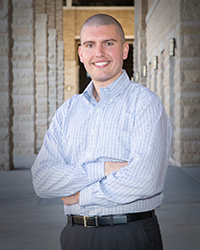
Joseph Cichocki was a postdoctoral research fellow in the laboratory of Dr. Ivan Rusyn from 2014-2017. Joe was also co-mentored by Drs. Weihsueh Chiu, David Threadgill, and Igor Pogribny (National Center for Toxicological Research). His research was focused on the contribution of genetics and underlying disease state to inter-individual variability in susceptibility to environmental chemical-induced toxicity.
Upon completing his training, Joe joined Alnylam Pharmaceuticals as a Toxicologist in the Early Development group. He transitioned to Vertex Pharmaceuticals in Boston after a couple of years. Joe is fortunate that his current role also allows him to pursue his research interests, including mechanistic toxicology.
Joe loves spending time outdoors, and in his free time he enjoys hiking with his dog, riding his bike, and running along the Charles River. He also enjoys relaxing weekends with family and friends, especially time spent on Cape Cod with wife, children and their dog.
Joe’s advice to current trainees (including postdocs!) is two-fold. First, develop an excellent foundational understanding of toxicology while at Texas A&M. The program there is truly top-notch and offers many opportunities to learn the basics of toxicology, including exposure assessment, target organ toxicity, and risk assessment. His second piece of advice is never to underestimate the power of networking. Make sure to attend and present at local and regional meetings, get involved with the Society of Toxicology or other professional societies, and apply for travel awards and leadership positions within the Society. While it’s not all about who you know, he speaks from experience that a solid network is invaluable for any professional.
Robert Fuentes
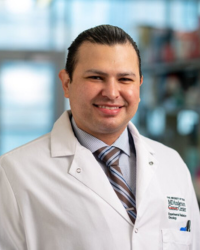
Dr. Natividad Roberto Fuentes Jr., graduated from the program in 2017 under the mentorship of Dr. Robert S. Chapkin. He was also fortunate enough to hold a Regulatory Science in Environmental Health and Toxicology Training Grant (T32-ES026568) during his final year in the program. His doctoral and postdoctoral training at Texas A&M University centered around elucidating the underlying cellular mechanisms of how diet impacts disease processes. Specifically, his work utilizes advanced fluorescent microscopy techniques and transgenic animal models to characterize the effects of dietary bioactives on the organization of proteolipid signaling clusters on colon and immune cell plasma membranes.
He then completed the translational focused CPRIT-TRIUMPH postdoctoral training program at the University of Texas MD Anderson Cancer Center where he pursued research to define the role of hypoxia-mediated lipid signaling in the pancreatic tumor microenvironment (TME) under the mentorship of Dr. Cullen M. Taniguchi. As a participant in the TRIUMPH program, Dr. Fuentes’ research focused on identifying novel mitochondrial- and plasma membrane-based therapeutic targets in pancreatic cancer.
Robert is now one of the newest Assistant Professors in the Department of Cancer Biology at the University of Texas MD Anderson Cancer Center. Currently, his lab employs microscopic and lipidomic techniques to characterize how nanoscale changes to lipids and proteins on tumor and tumor microenvironment (TME) cell-cell contact sites influences immunosuppression. The ultimate goal of his work is to develop membrane-based intervention strategies that improve human health and outcomes for patients afflicted with cancer.
His advice to students is to never stop being curious. Attend as many seminars and talks as possible because you never know where the next big idea will come from. Ultimately pursue what excites you!
Fabian Grimm
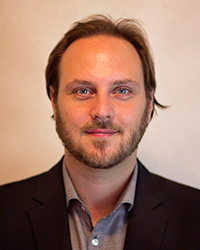
Former Toxicology and Superfund Research Program postdoctoral trainee (2014-2017) Fabian Grimm, Ph.D., is now a Team Lead for Toxicology and Ecotoxicology with Global Product Stewardship of Clariant Specialty Chemicals, one of the world’s leading specialty chemical companies. Fabian relocated to his native Germany after a career with ExxonMobil Biomedical Sciences in the US. According to Grimm, much of his post-academic career’s focus was shaped by the Superfund Center’s emphasis on transdisciplinary research and collaborative science.
Grimm began his career in biomedical research as a doctoral trainee at the University of Iowa SRP Center under the guidance of Michael Duffel, Ph.D. He studied the mechanisms by which exposure to polychlorinated biphenyls (PCBs), a large and complex group of chemicals, may affect thyroid function. After completing his Ph.D., he continued his postdoctoral training at the Texas A&M University SRP Center working with Center Director Ivan Rusyn, M.D., Ph.D. There, he focused on developing and using laboratory and computational approaches to advance regulatory science. For example, using novel cell models that better capture the physiology of organs to address critical gaps in knowledge about potentially hazardous chemicals and mixtures.
His research was recognized by several awards from the Society of Toxicology and other organizations. Among these was the ALTEX Prize in 2019 (Alternatives to Animal Experimentation) for his work using human cells as replacements for animal tests. He also received the Perry J. Gehring Risk Assessment Award from the Society of Toxicology Risk Assessment Specialty Section in 2017.
Outside of the office, Fabian enjoys spending time with his family and seasonal activities such as beach days, bike tours, and winter sports. He also likes to work on home improvement projects.
Read More Stories
These stories detail the amazing work done
by Texas A&M Toxicology alumni.

The Aggie Network
With over 500,000 former students worldwide,
Aggies are deeply connected.